
The book’s cover: Mushrooms in situ
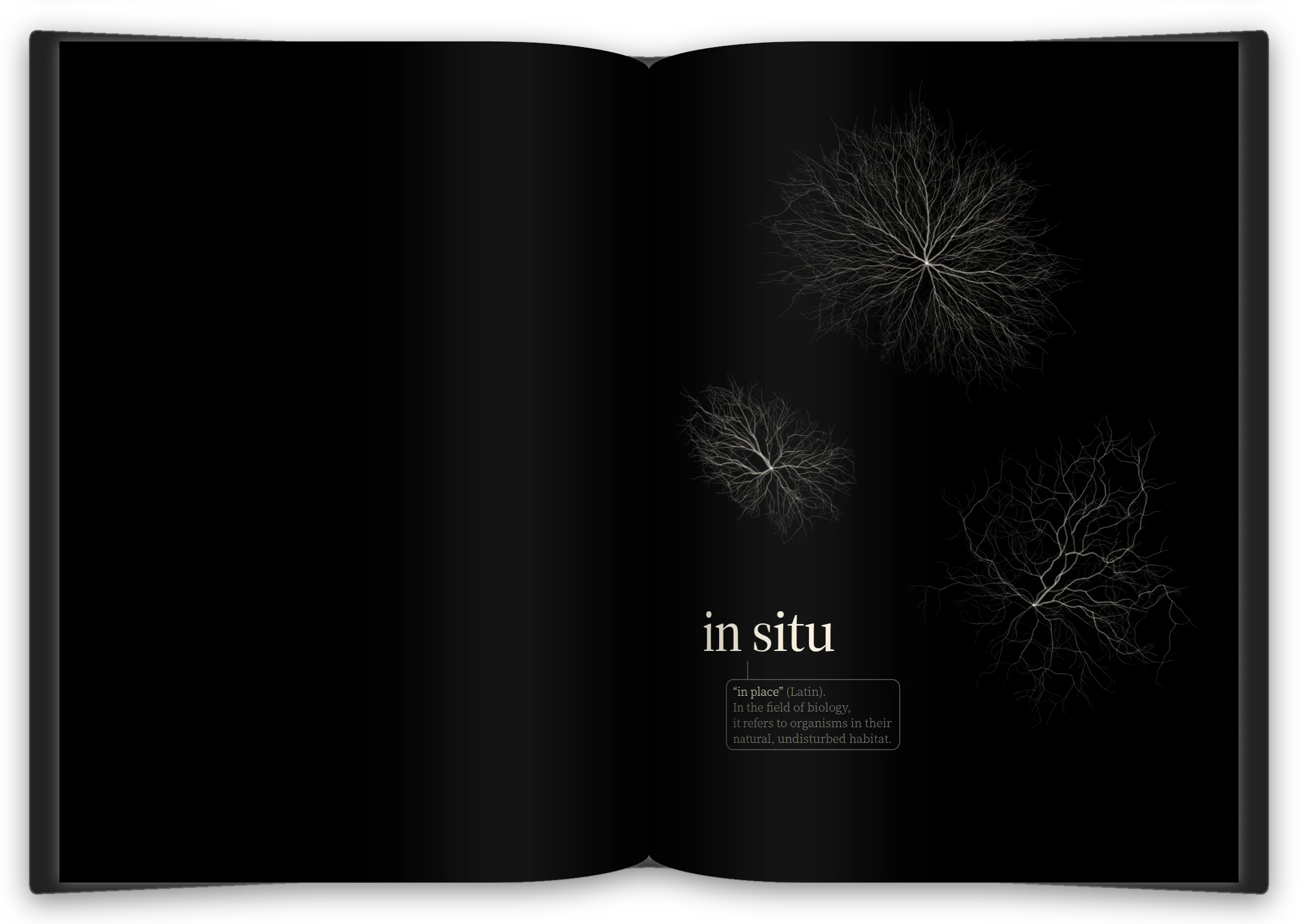
The title page: in situ, “in place” (Latin)
A timeline on Earth, and essential facts about fungi
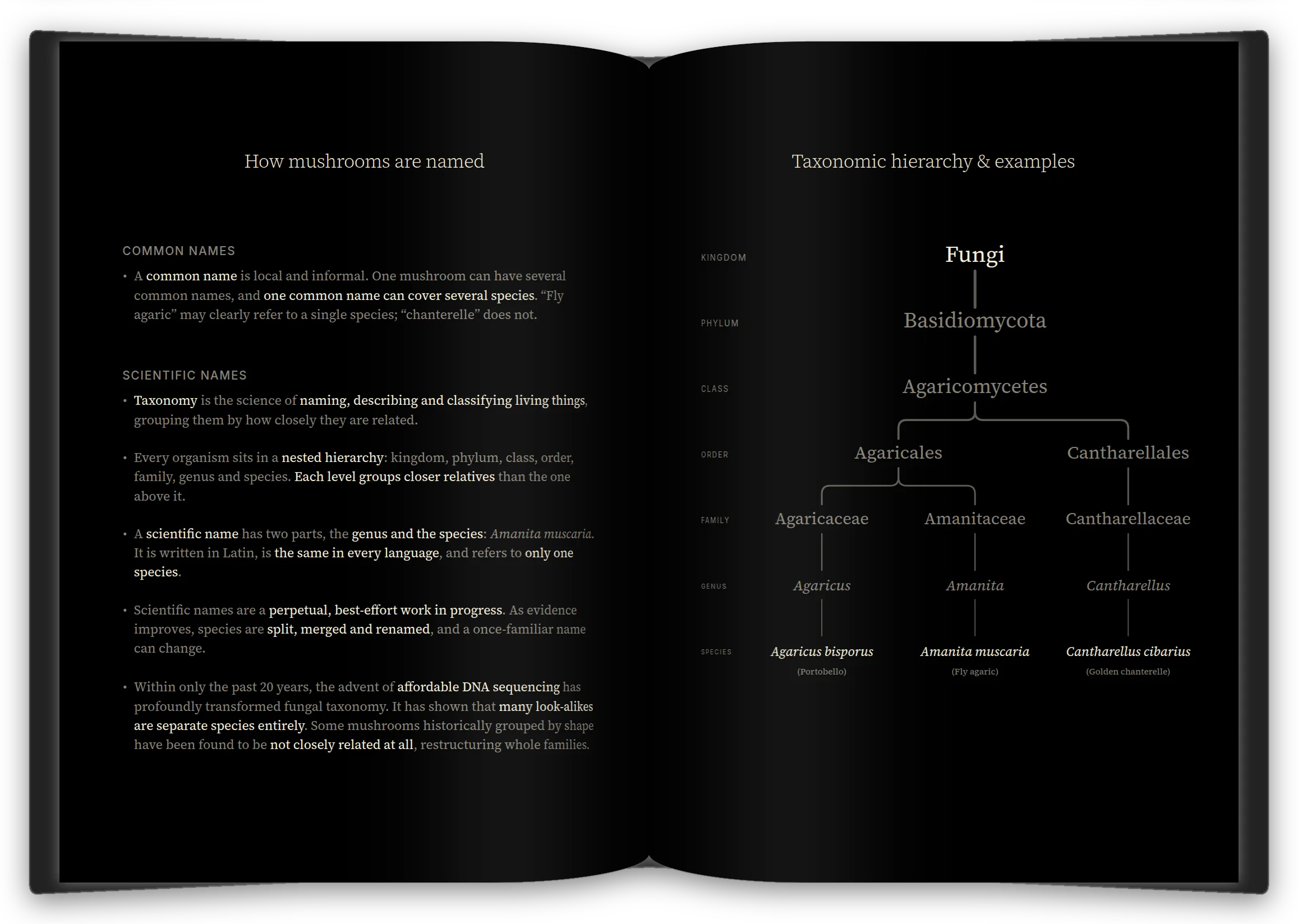
How mushrooms are named, and a taxonomic tree
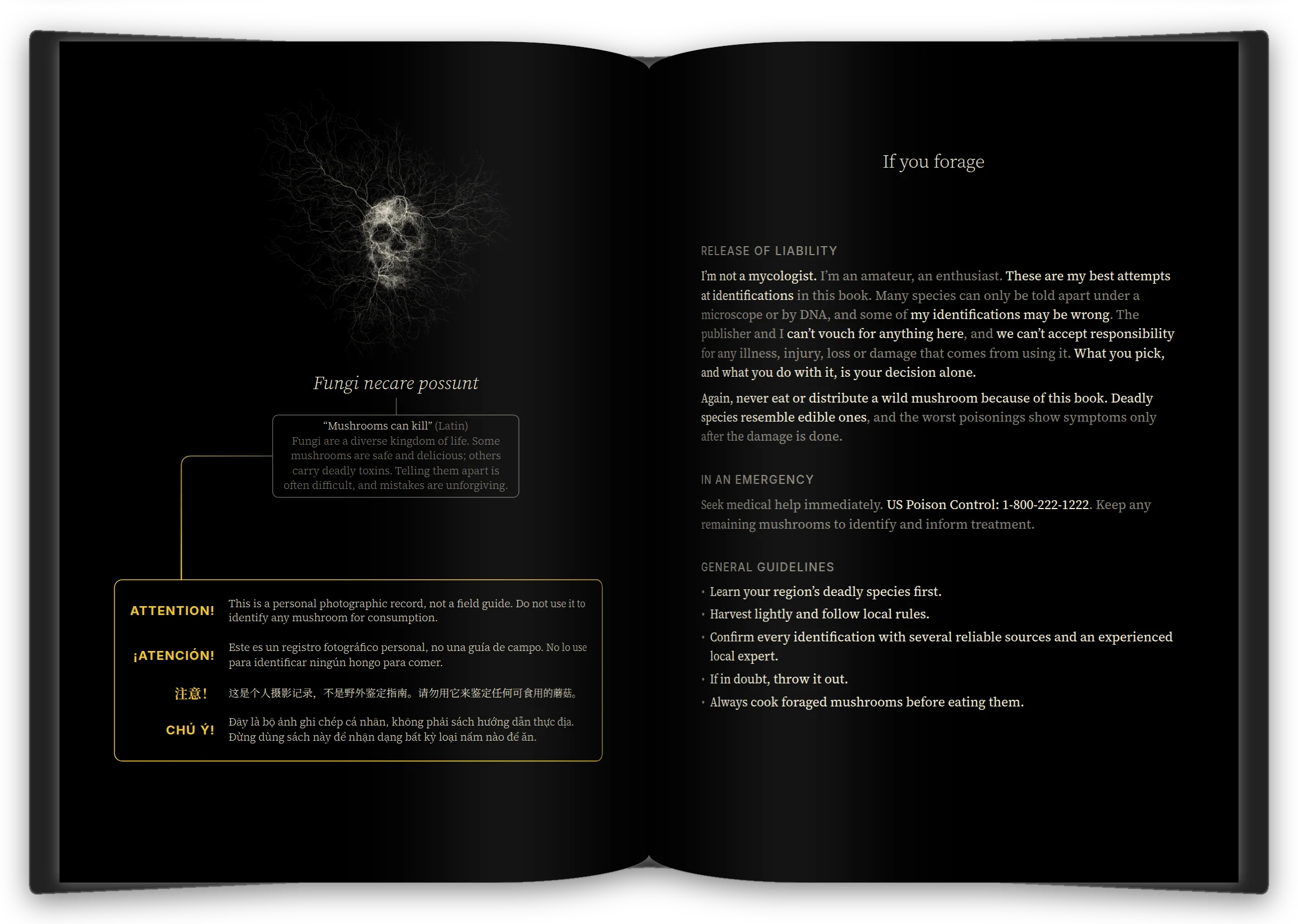
Fungi naturae possunt: the attention notice, and if you forage
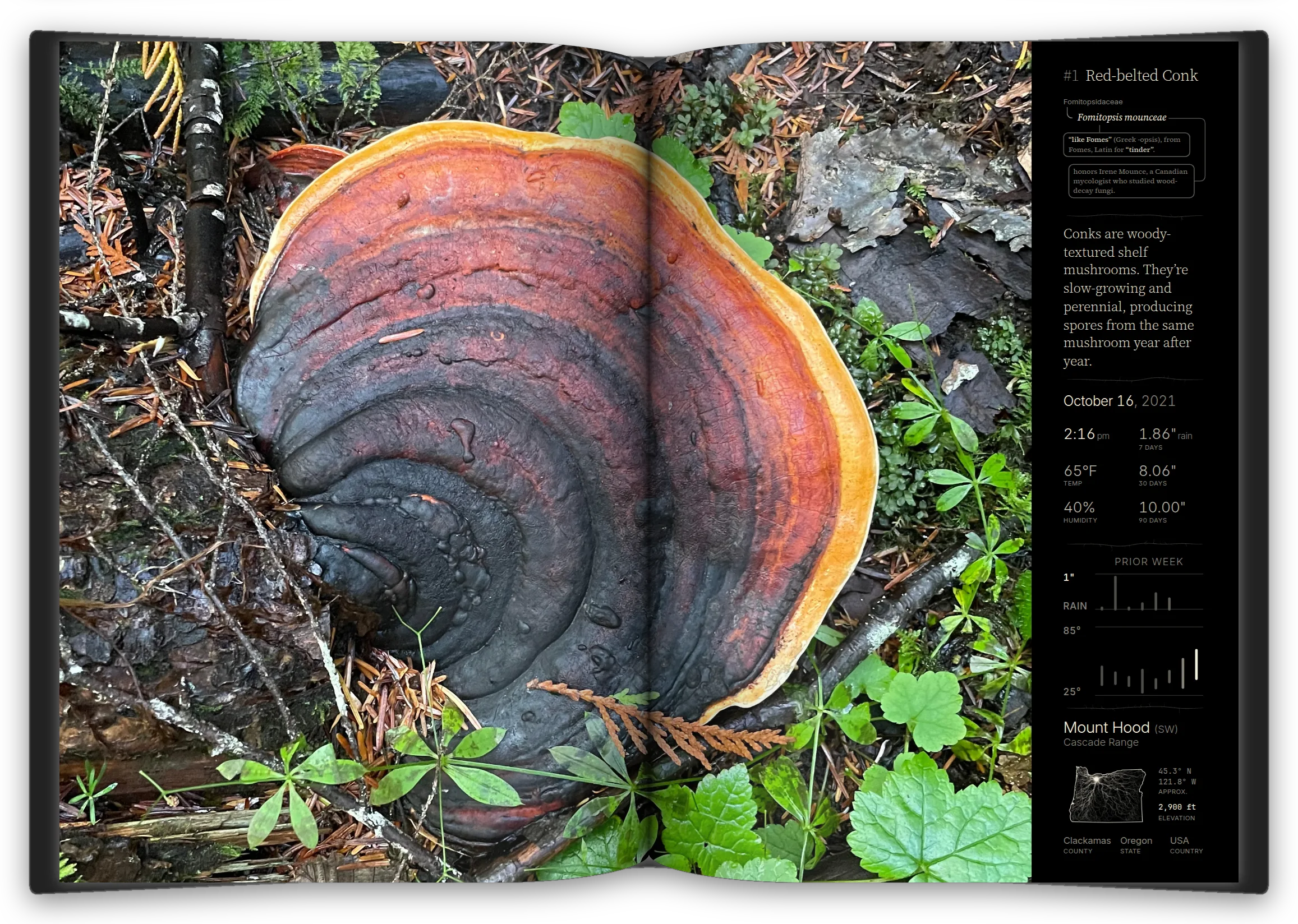
Red-belted Conk (Fomitopsis mounceae)
#1 Red-belted Conk (Fomitopsis mounceae). Conks are woody-textured shelf mushrooms. They’re slow-growing and perennial, producing spores from the same mushroom year after year. Photographed near Mount Hood, Cascade Range, Oregon, October 2021.
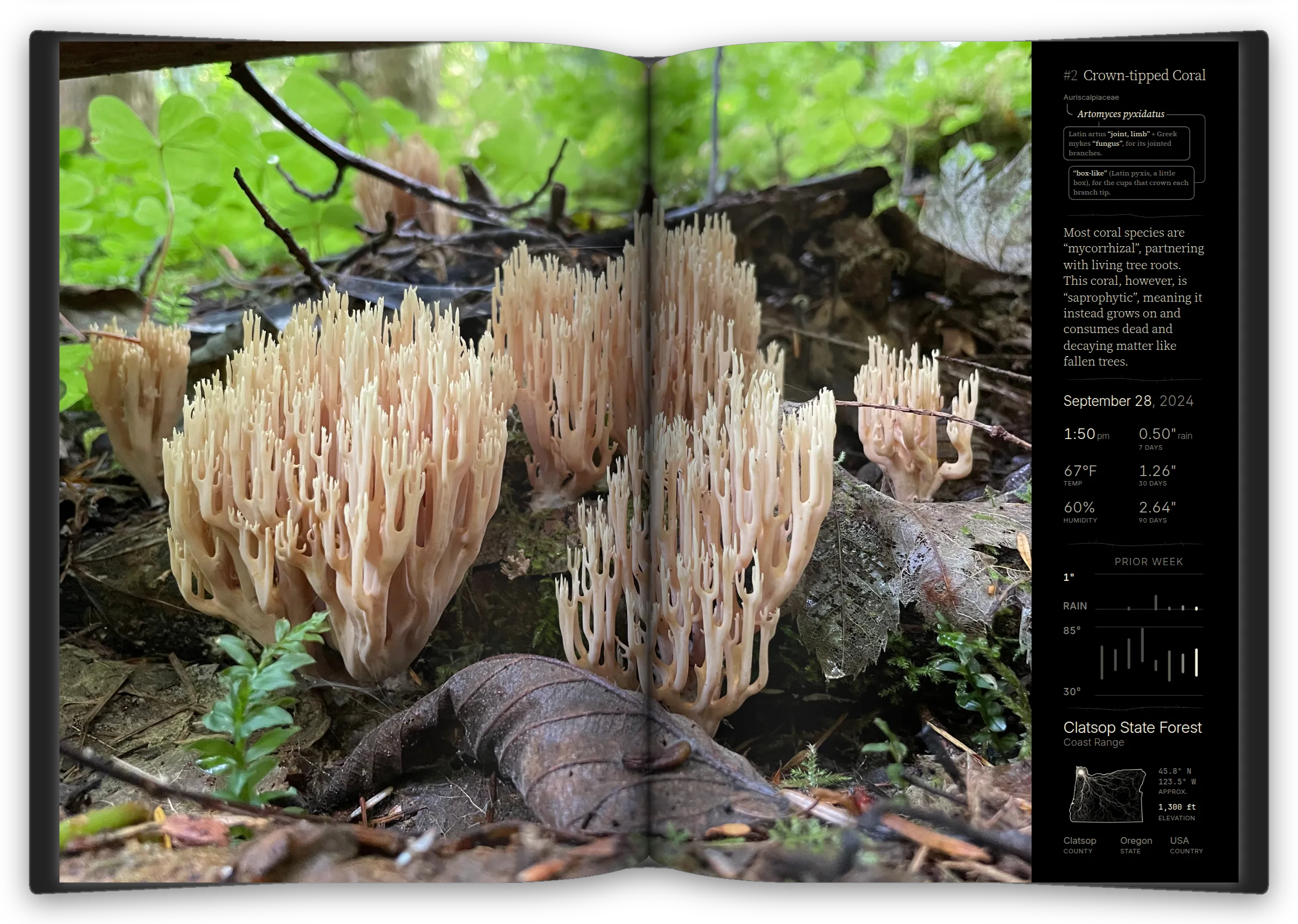
Crown-tipped Coral (Artomyces pyxidatus)
#2 Crown-tipped Coral (Artomyces pyxidatus). Most coral species are “mycorrhizal”, partnering with living tree roots. This coral, however, is “saprophytic”, meaning it instead grows on and consumes dead and decaying matter like fallen trees. Photographed near Clatsop State Forest, Coast Range, Oregon, September 2024.
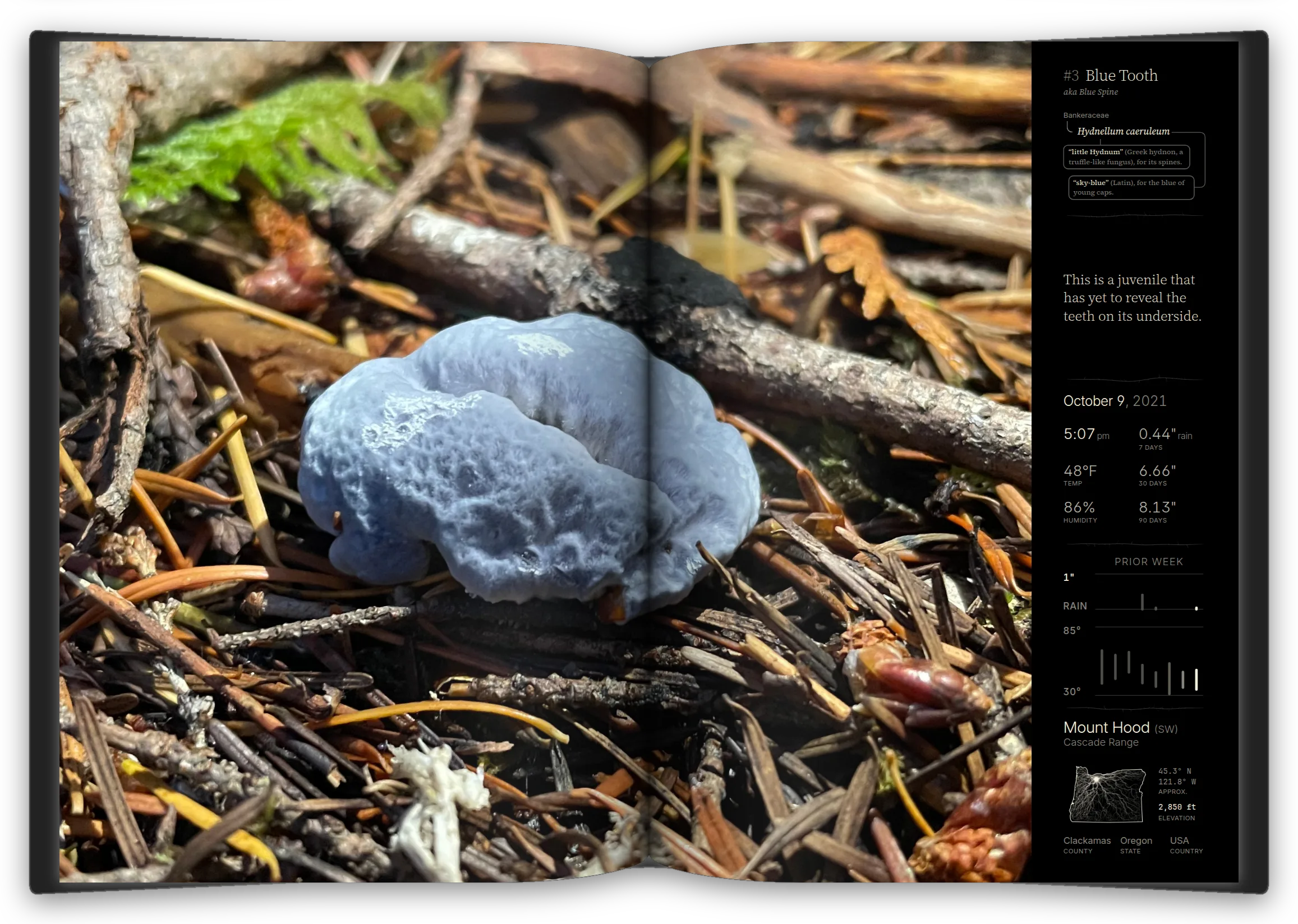
Blue Tooth (Hydnellum caeruleum)
#3 Blue Tooth (Hydnellum caeruleum). This is a juvenile that has yet to reveal the teeth on its underside. Photographed near Mount Hood, Cascade Range, Oregon, October 2021.
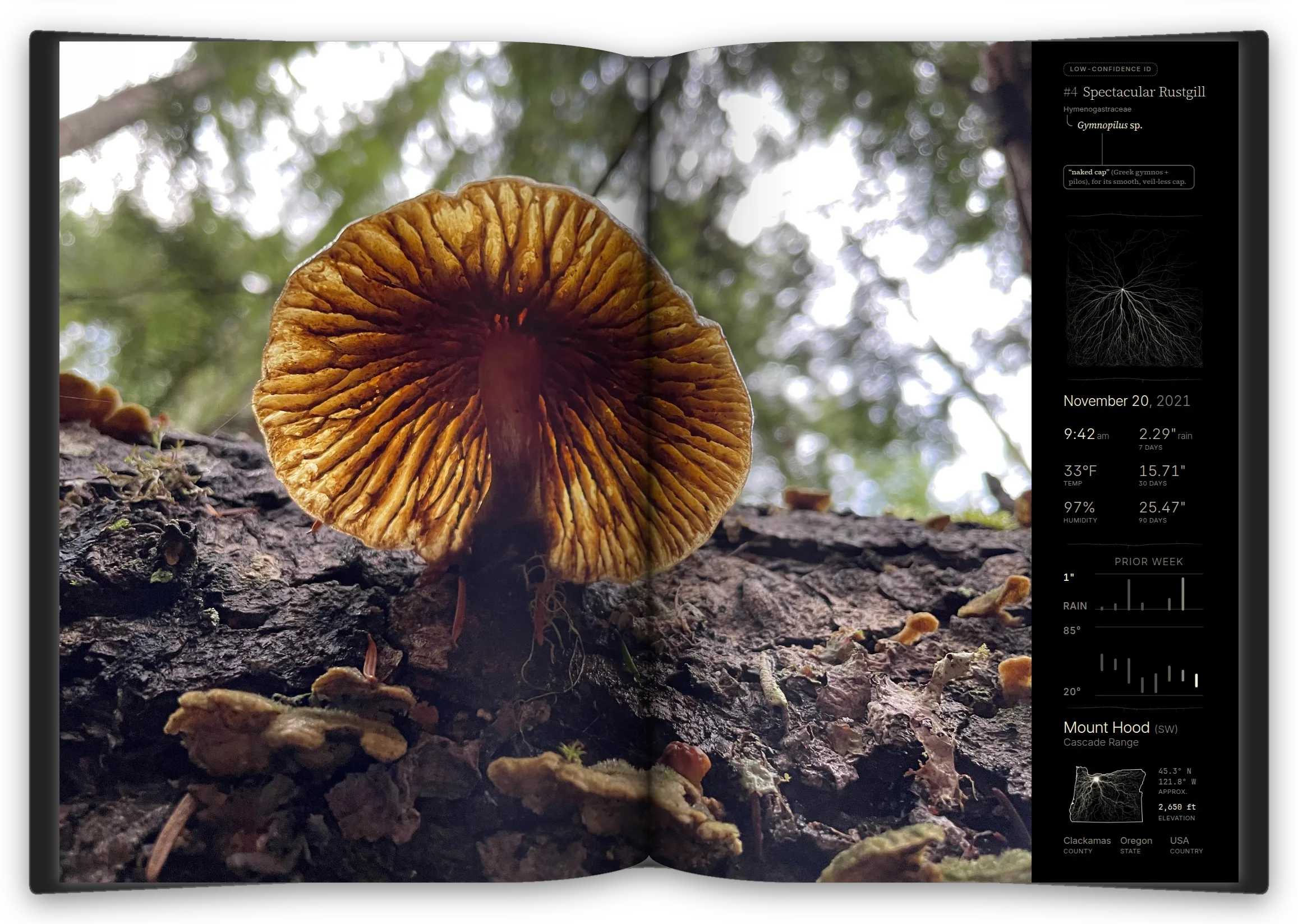
Spectacular Rustgill (Gymnopilus sp.)
#4 Spectacular Rustgill (Gymnopilus sp.). Photographed near Mount Hood, Cascade Range, Oregon, November 2021.
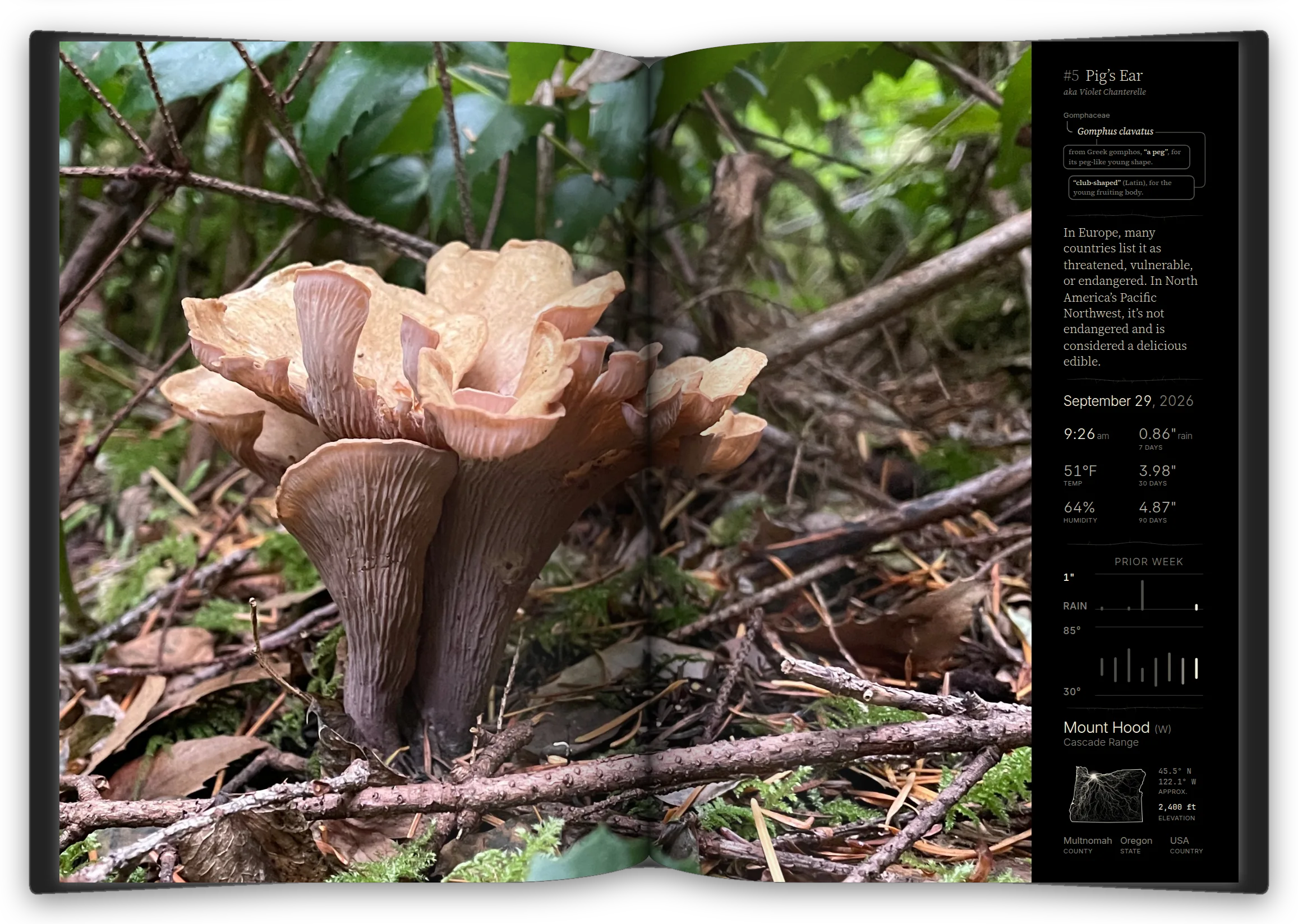
Pig’s Ear (Gomphus clavatus)
#5 Pig’s Ear (Gomphus clavatus). In Europe, many countries list it as threatened, vulnerable, or endangered. In North America’s Pacific Northwest, it’s not endangered and is considered a delicious edible. Photographed near Mount Hood, Cascade Range, Oregon, September 2026.
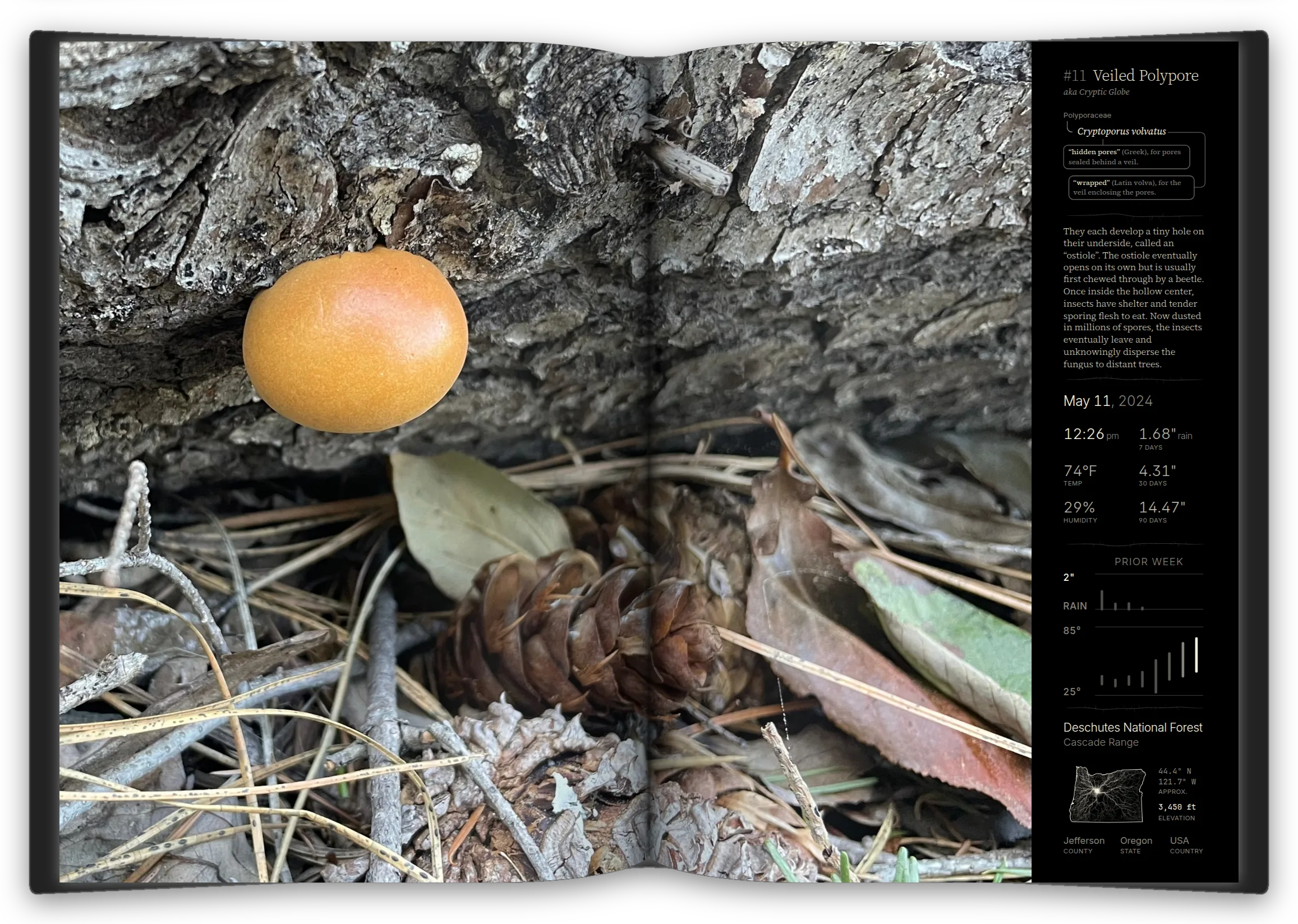
Veiled Polypore (Cryptoporus volvatus)
#11 Veiled Polypore (Cryptoporus volvatus). They each develop a tiny hole on their underside, called an “ostiole”. The ostiole eventually opens on its own but is usually first chewed through by a beetle. Once inside the hollow center, insects have shelter and tender sporing flesh to eat. Now dusted in millions of spores, the insects eventually leave and unknowingly disperse the fungus to distant trees. Photographed near Deschutes National Forest, Cascade Range, Oregon, May 2024.
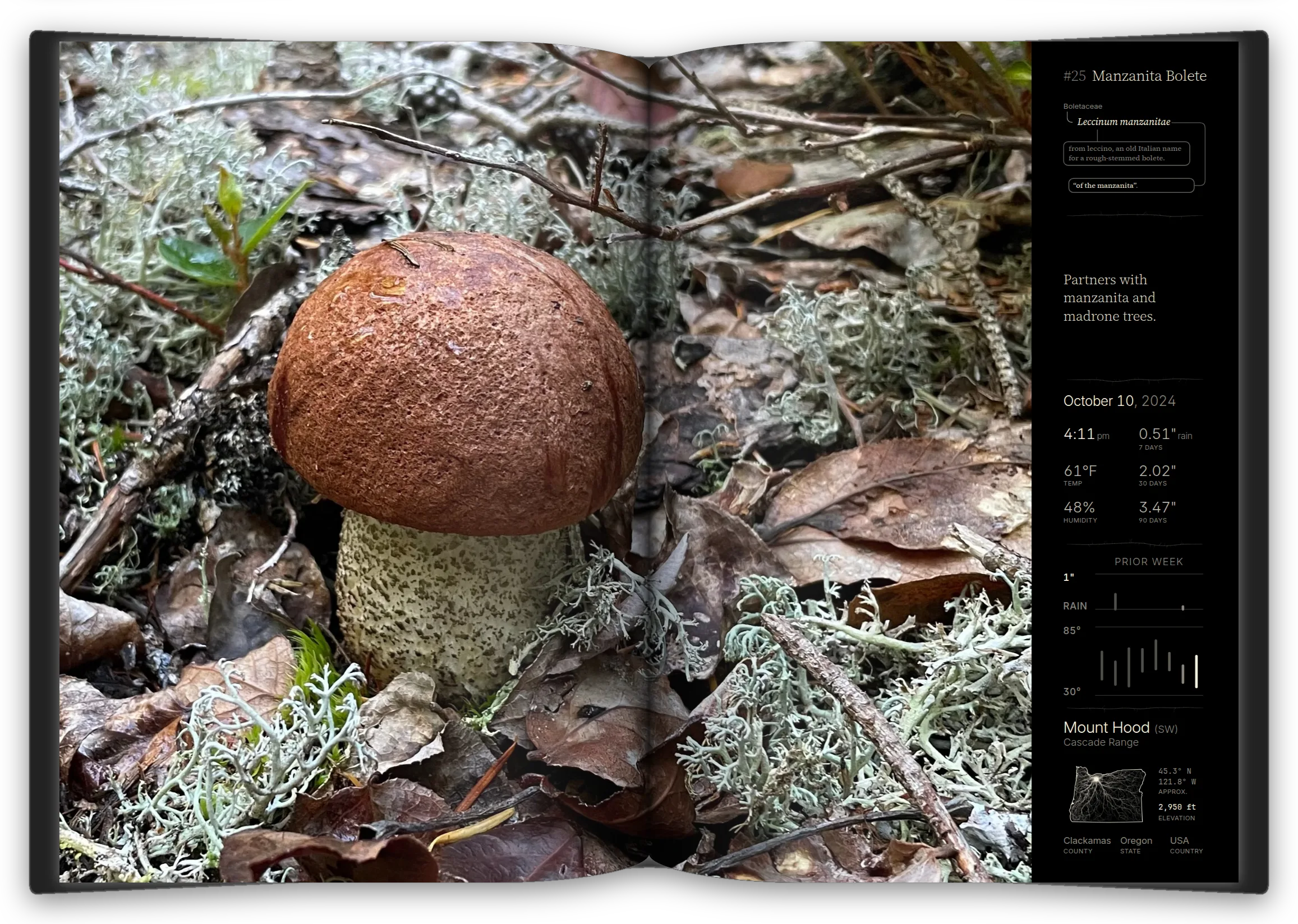
Manzanita Bolete (Leccinum manzanitae)
#25 Manzanita Bolete (Leccinum manzanitae). Partners with manzanita and madrone trees. Photographed near Mount Hood, Cascade Range, Oregon, October 2024.
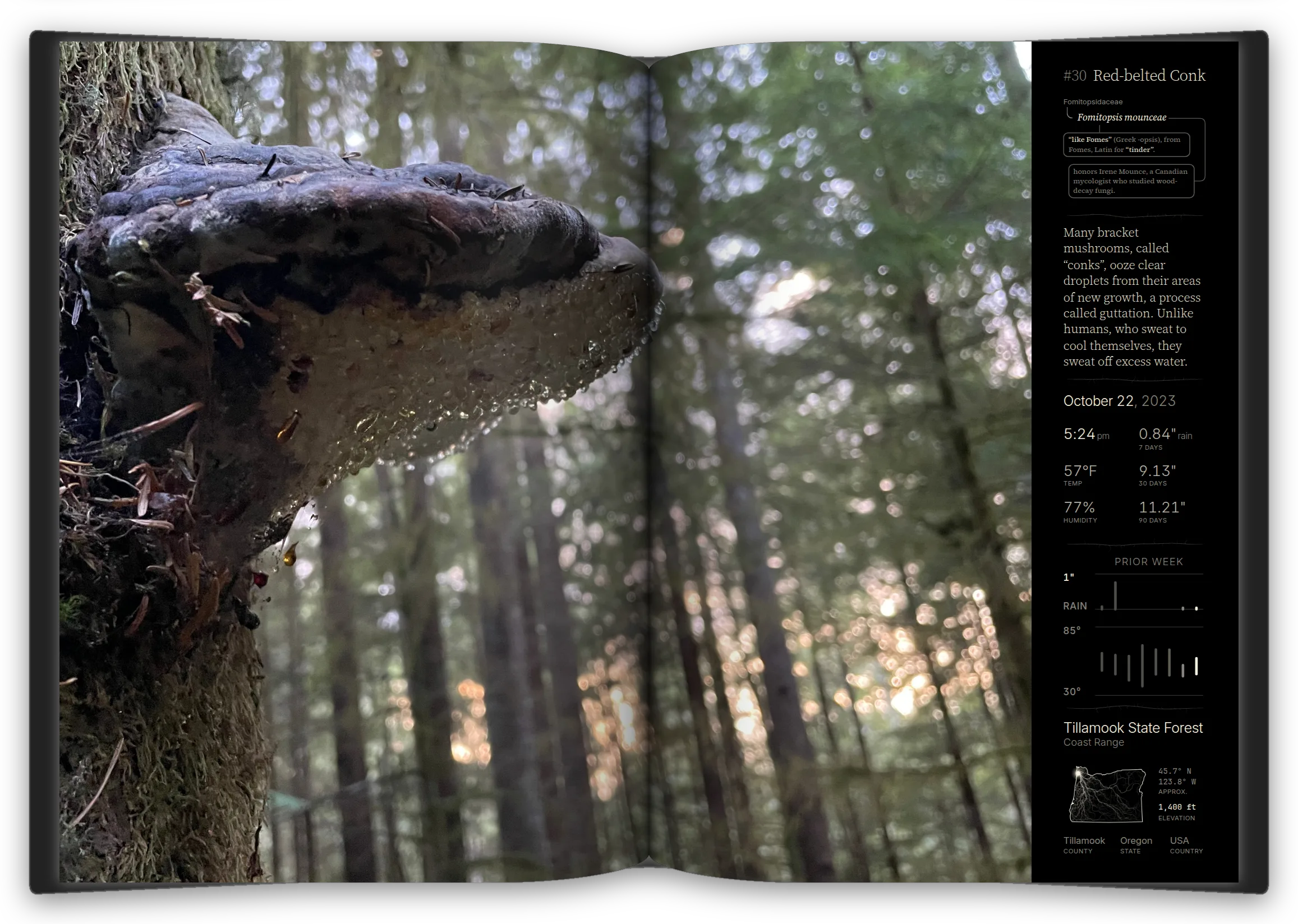
Red-belted Conk (Fomitopsis mounceae)
#30 Red-belted Conk (Fomitopsis mounceae). Many bracket mushrooms, called “conks”, ooze clear droplets from their areas of new growth, a process called guttation. Unlike humans, who sweat to cool themselves, they sweat off excess water. Photographed near Tillamook State Forest, Coast Range, Oregon, October 2023.
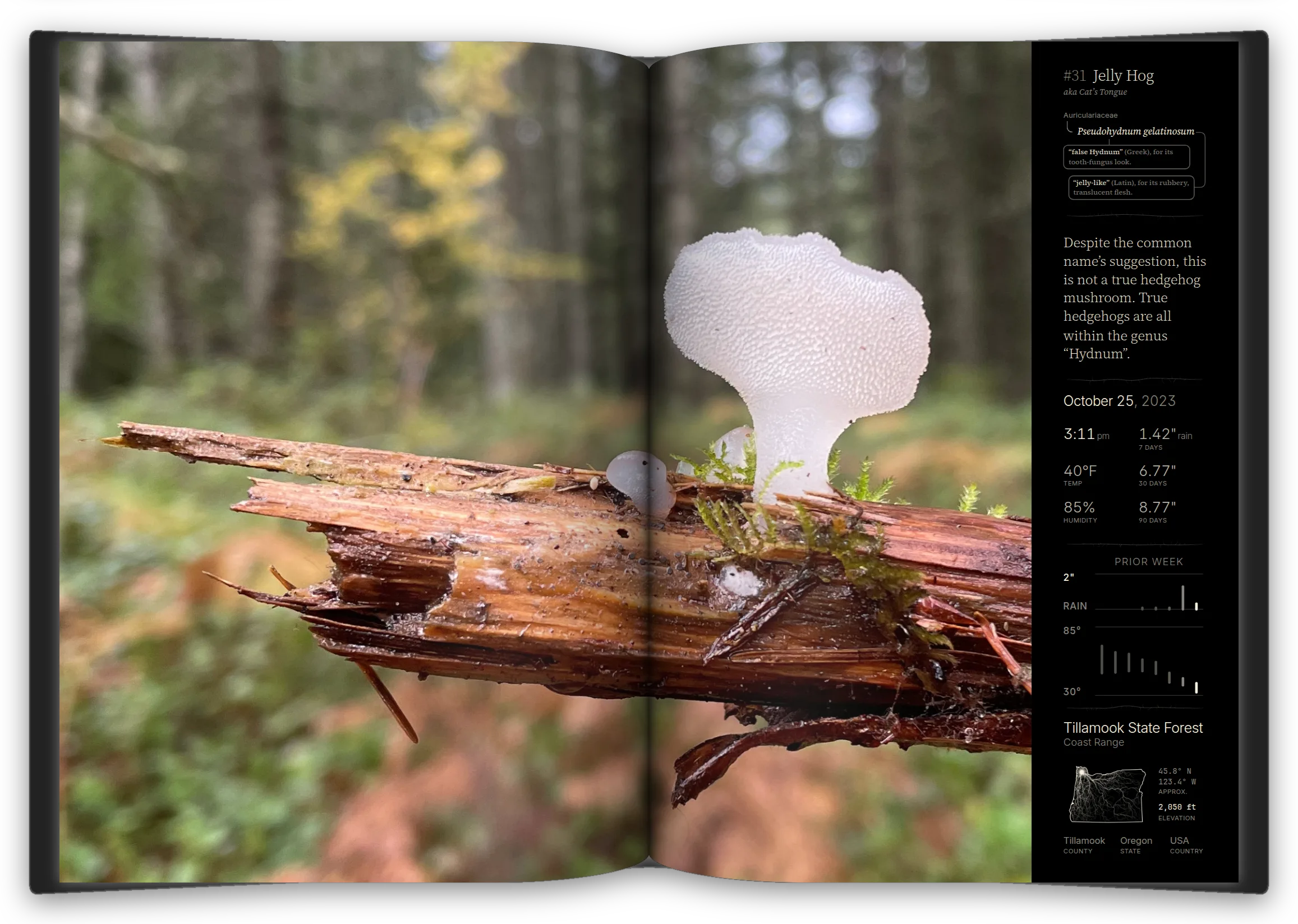
Jelly Hog (Pseudohydnum gelatinosum)
#31 Jelly Hog (Pseudohydnum gelatinosum). Despite the common name’s suggestion, this is not a true hedgehog mushroom. True hedgehogs are all within the genus “Hydnum”. Photographed near Tillamook State Forest, Coast Range, Oregon, October 2023.
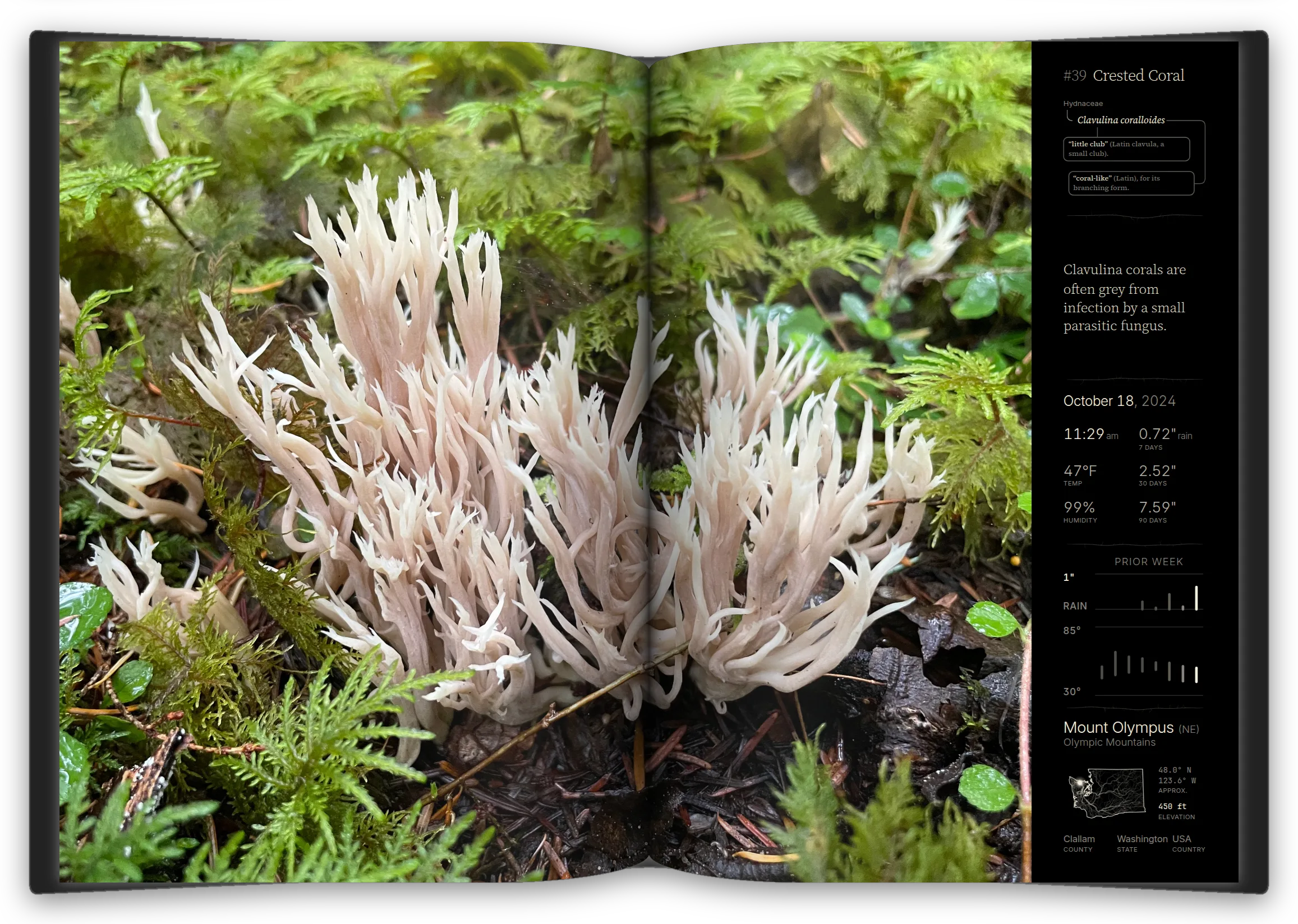
Crested Coral (Clavulina coralloides)
#39 Crested Coral (Clavulina coralloides). Clavulina corals are often grey from infection by a small parasitic fungus. Photographed near Mount Olympus, Olympic Mountains, Washington, October 2024.
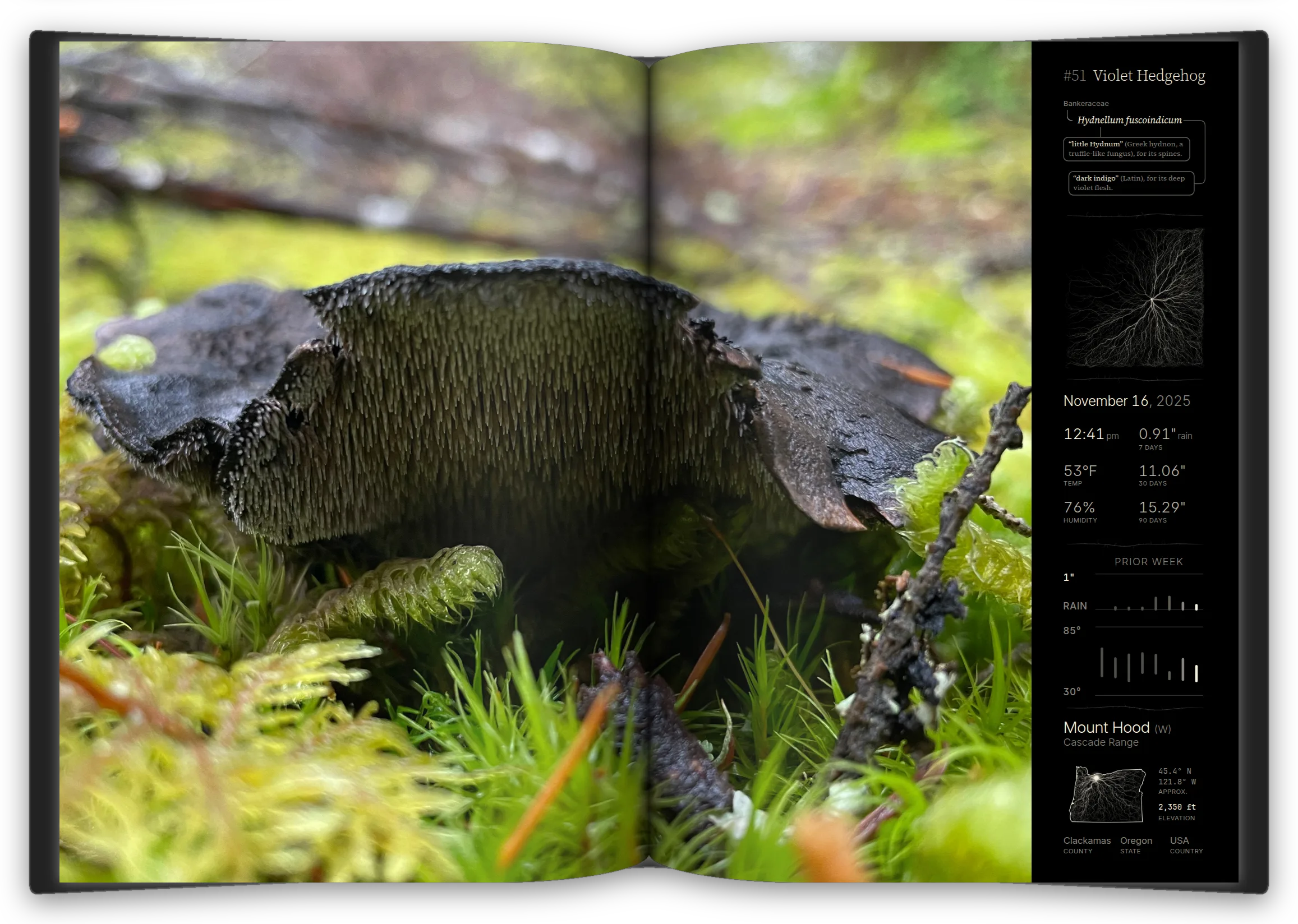
Violet Hedgehog (Hydnellum fuscoindicum)
#51 Violet Hedgehog (Hydnellum fuscoindicum). Photographed near Mount Hood, Cascade Range, Oregon, November 2025.
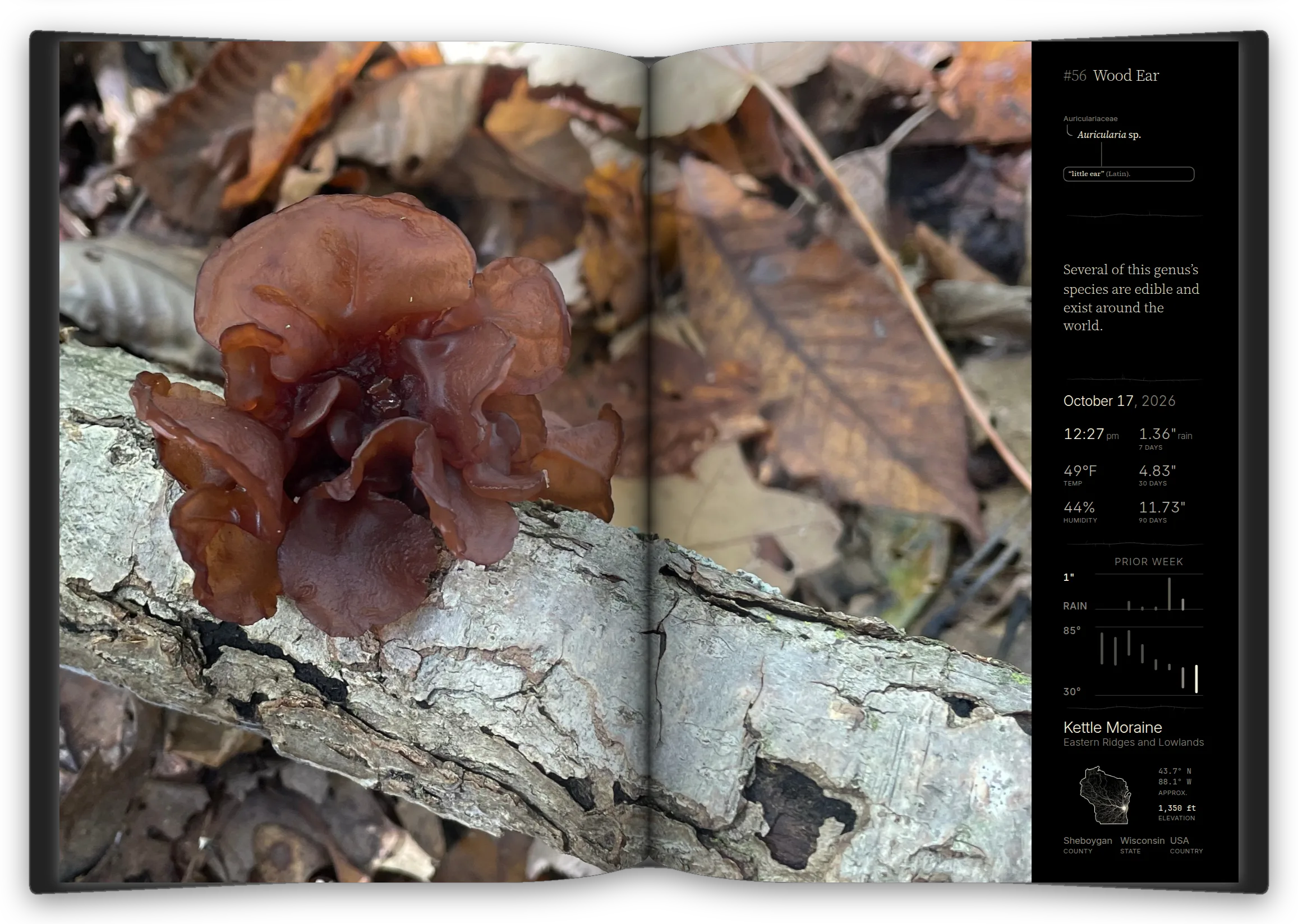
Wood Ear (Auricularia sp.)
#56 Wood Ear (Auricularia sp.). Several of this genus’s species are edible and exist around the world. Photographed near Kettle Moraine, Eastern Ridges and Lowlands, Wisconsin, October 2026.
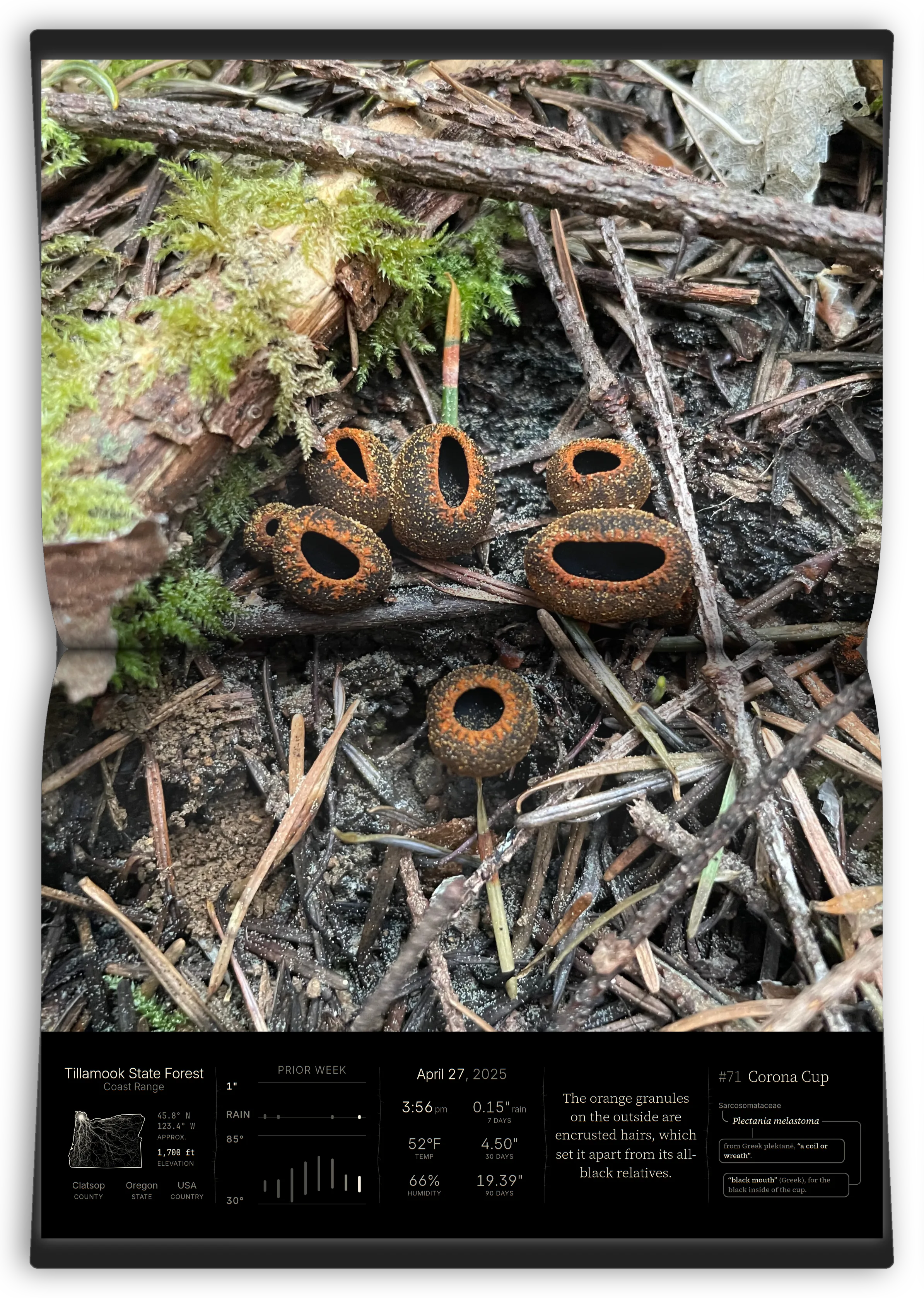
Corona Cup (Plectania melastoma)
#71 Corona Cup (Plectania melastoma). The orange granules on the outside are encrusted hairs, which set it apart from its all-black relatives. Photographed near Tillamook State Forest, Coast Range, Oregon, April 2025.
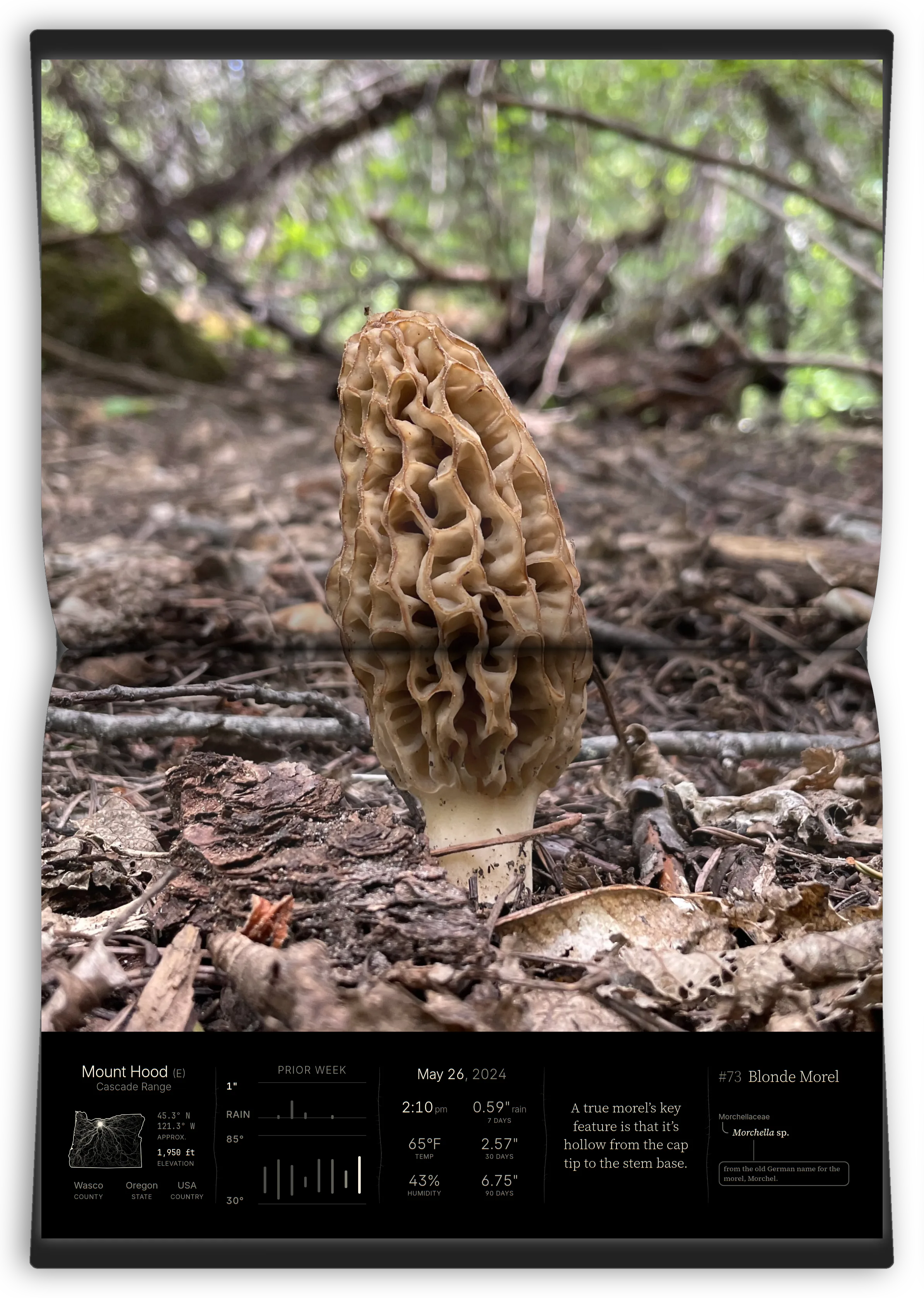
Blonde Morel (Morchella sp.)
#73 Blonde Morel (Morchella sp.). A true morel’s key feature is that it’s hollow from the cap tip to the stem base. Photographed near Mount Hood, Cascade Range, Oregon, May 2024.
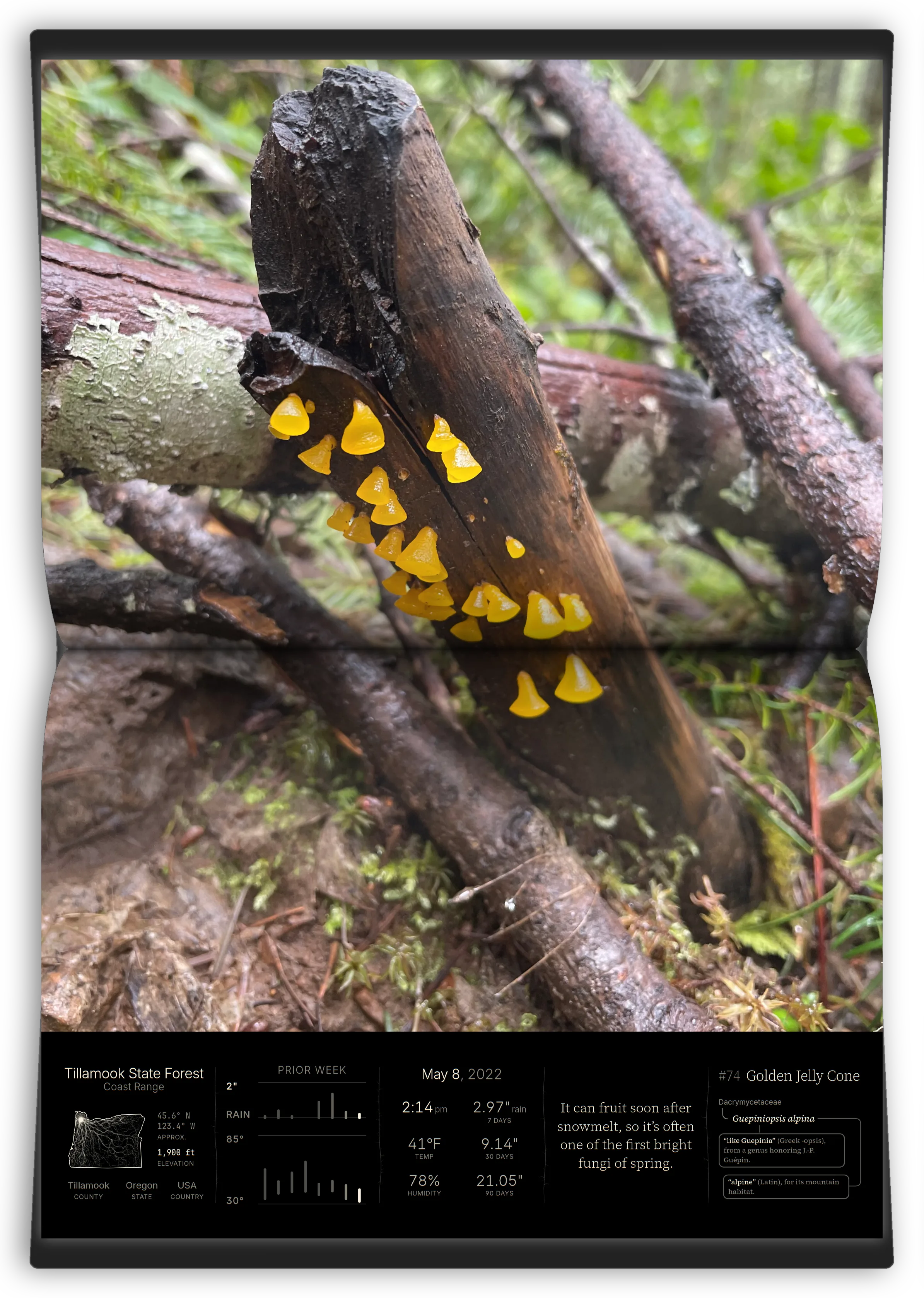
Golden Jelly Cone (Guepiniopsis alpina)
#74 Golden Jelly Cone (Guepiniopsis alpina). It can fruit soon after snowmelt, so it’s often one of the first bright fungi of spring. Photographed near Tillamook State Forest, Coast Range, Oregon, May 2022.
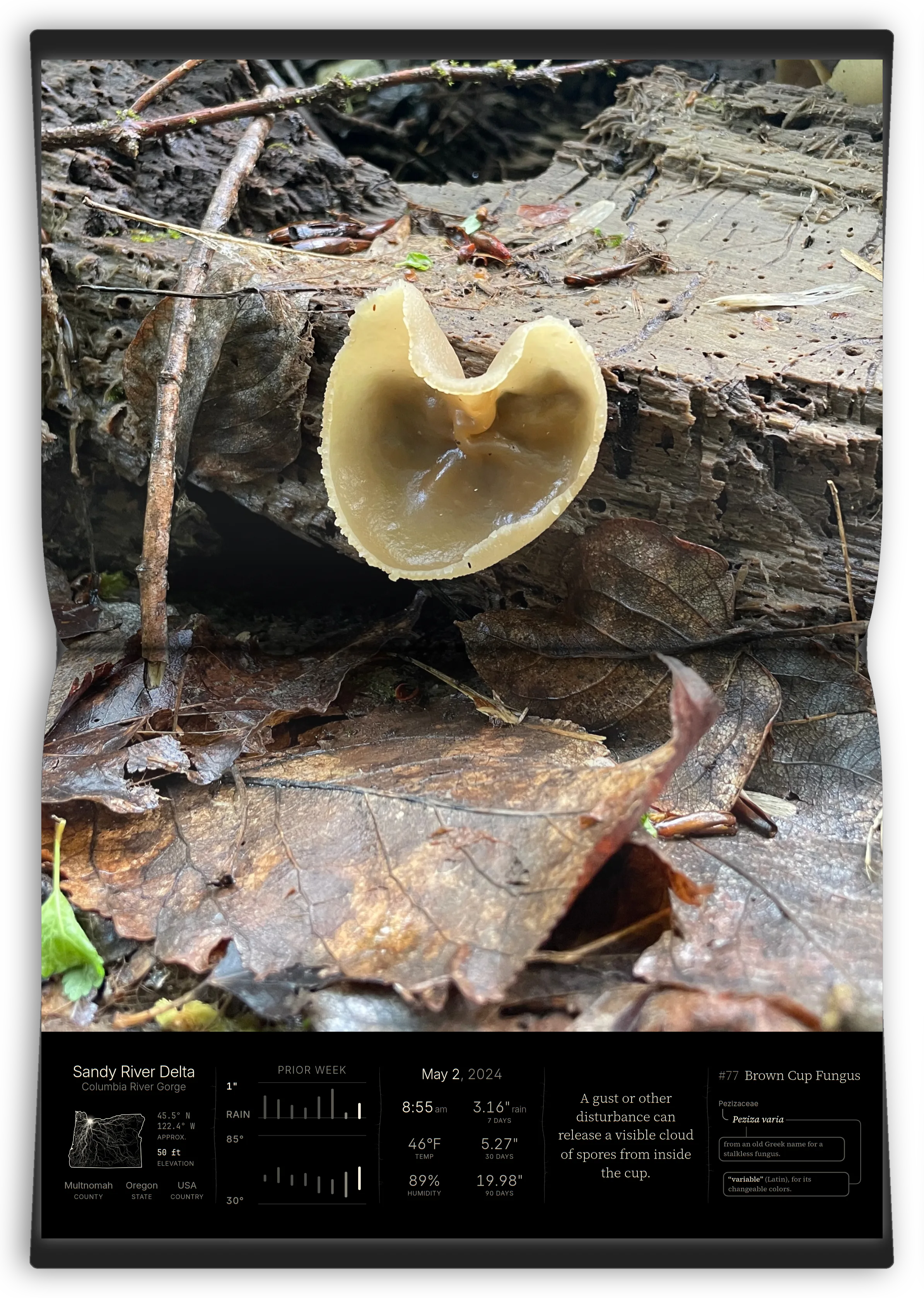
Brown Cup Fungus (Peziza varia)
#77 Brown Cup Fungus (Peziza varia). A gust or other disturbance can release a visible cloud of spores from inside the cup. Photographed near Sandy River Delta, Columbia River Gorge, Oregon, May 2024.
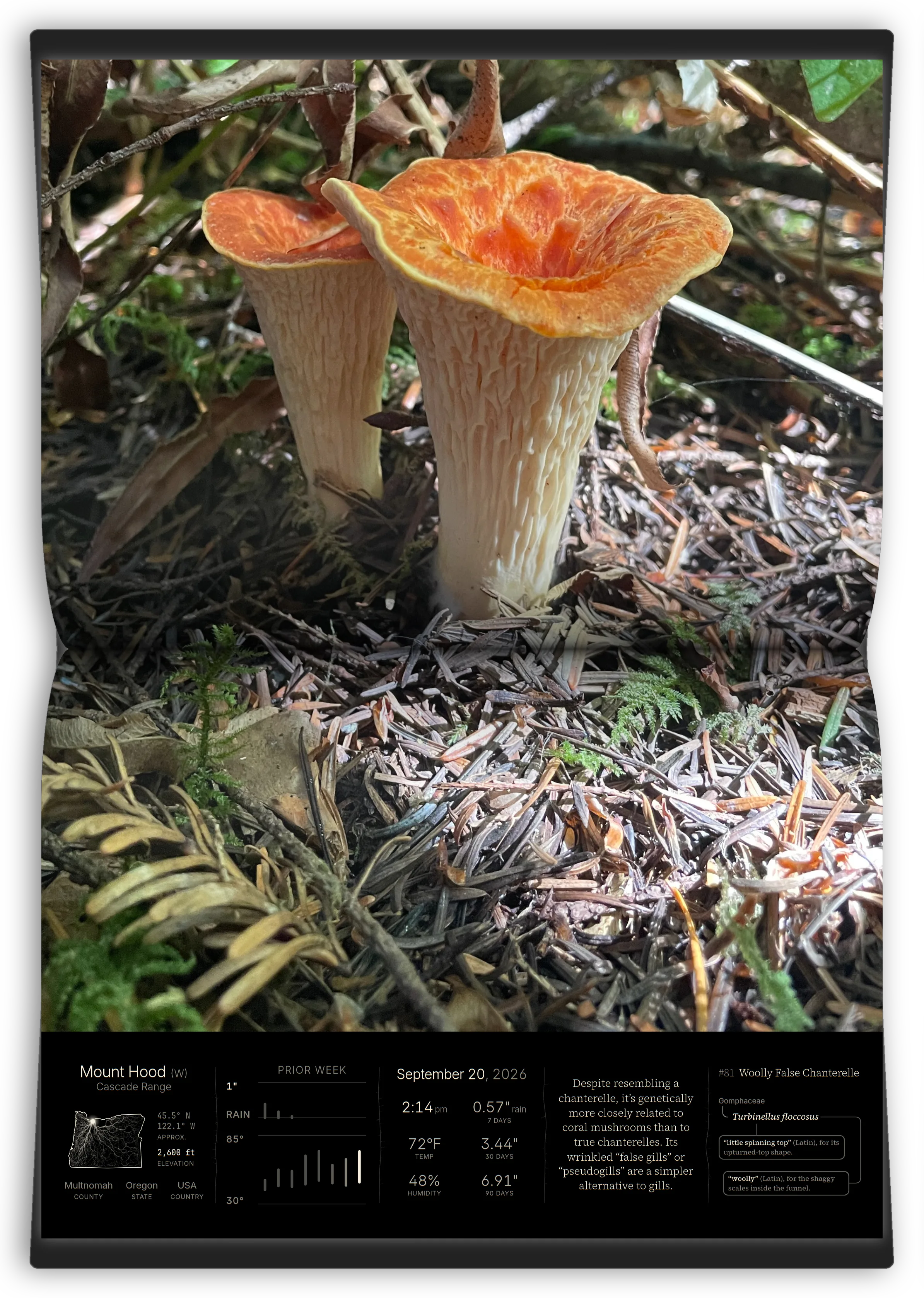
Woolly False Chanterelle (Turbinellus floccosus)
#81 Woolly False Chanterelle (Turbinellus floccosus). Despite resembling a chanterelle, it’s genetically more closely related to coral mushrooms than to true chanterelles. Its wrinkled “false gills” or “pseudogills” are a simpler alternative to gills. Photographed near Mount Hood, Cascade Range, Oregon, September 2026.
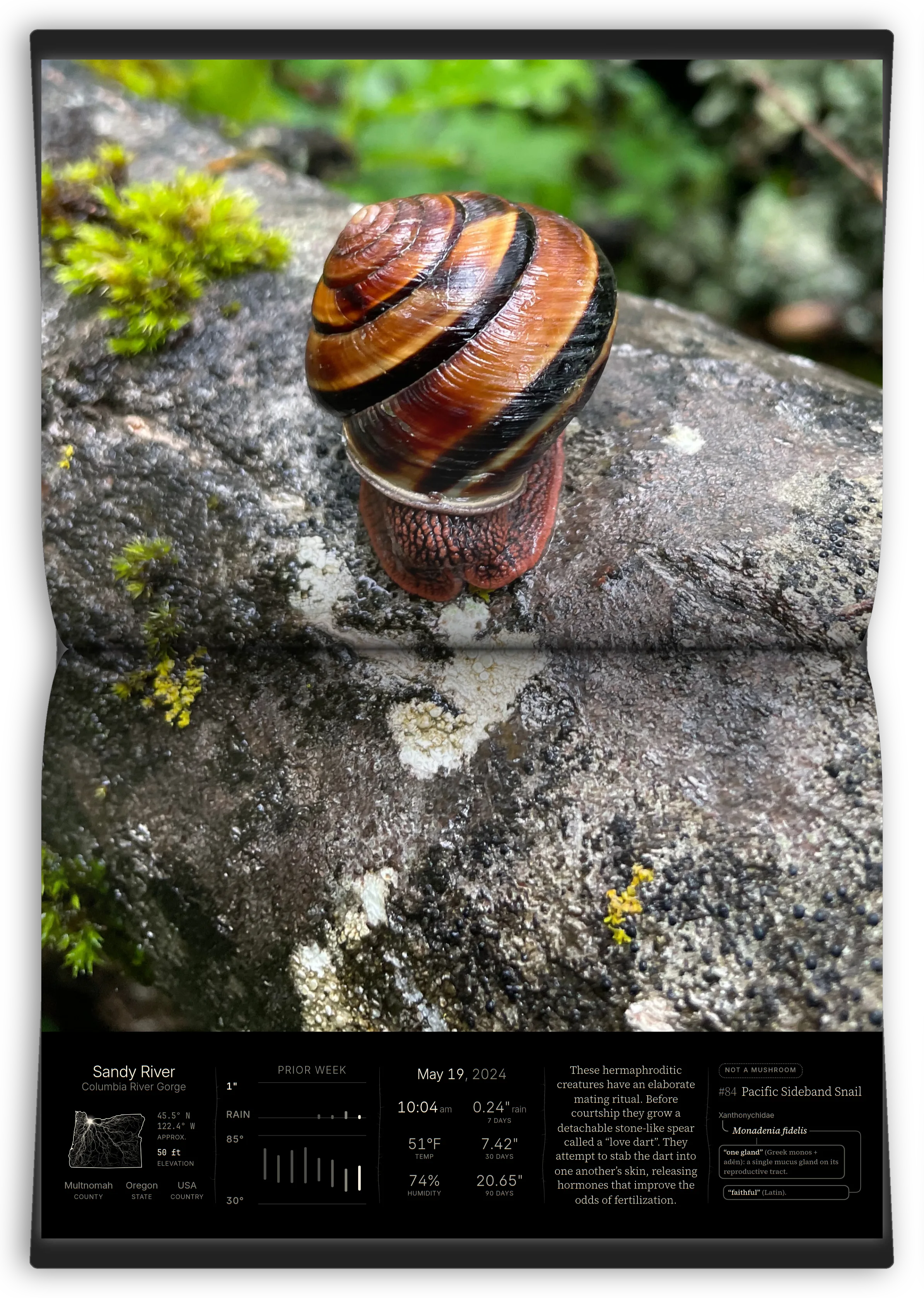
Pacific Sideband Snail (Monadenia fidelis)
#84 Pacific Sideband Snail (Monadenia fidelis). These hermaphroditic creatures have an elaborate mating ritual. Before courtship they grow a detachable stone-like spear called a “love dart”. They attempt to stab the dart into one another’s skin, releasing hormones that improve the odds of fertilization. Photographed near Sandy River, Columbia River Gorge, Oregon, May 2024.
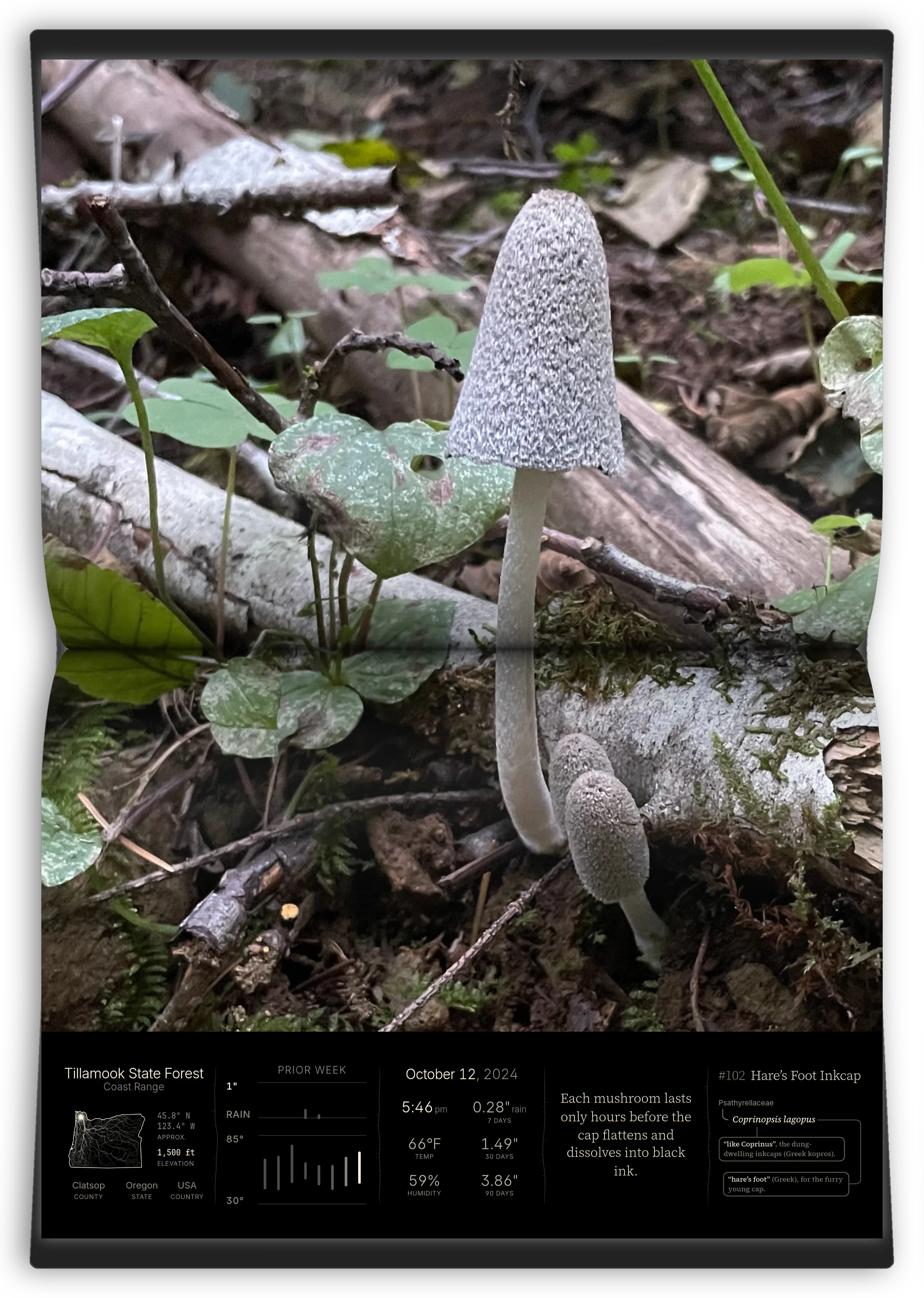
Hare’s Foot Inkcap (Coprinopsis lagopus)
#102 Hare’s Foot Inkcap (Coprinopsis lagopus). Each mushroom lasts only hours before the cap flattens and dissolves into black ink. Photographed near Tillamook State Forest, Coast Range, Oregon, October 2024.
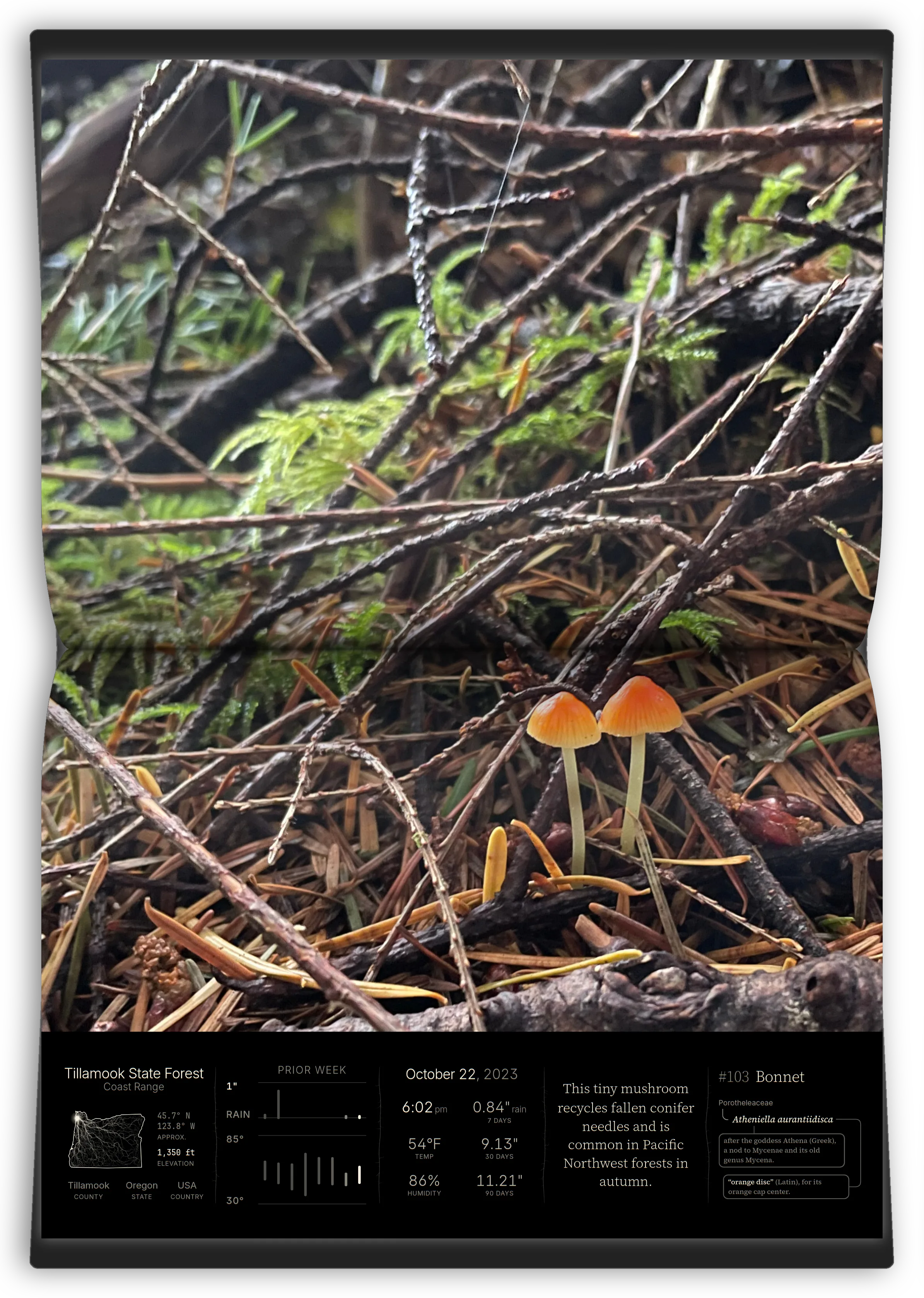
Bonnet (Atheniella aurantiidisca)
#103 Bonnet (Atheniella aurantiidisca). This tiny mushroom recycles fallen conifer needles and is common in Pacific Northwest forests in autumn. Photographed near Tillamook State Forest, Coast Range, Oregon, October 2023.
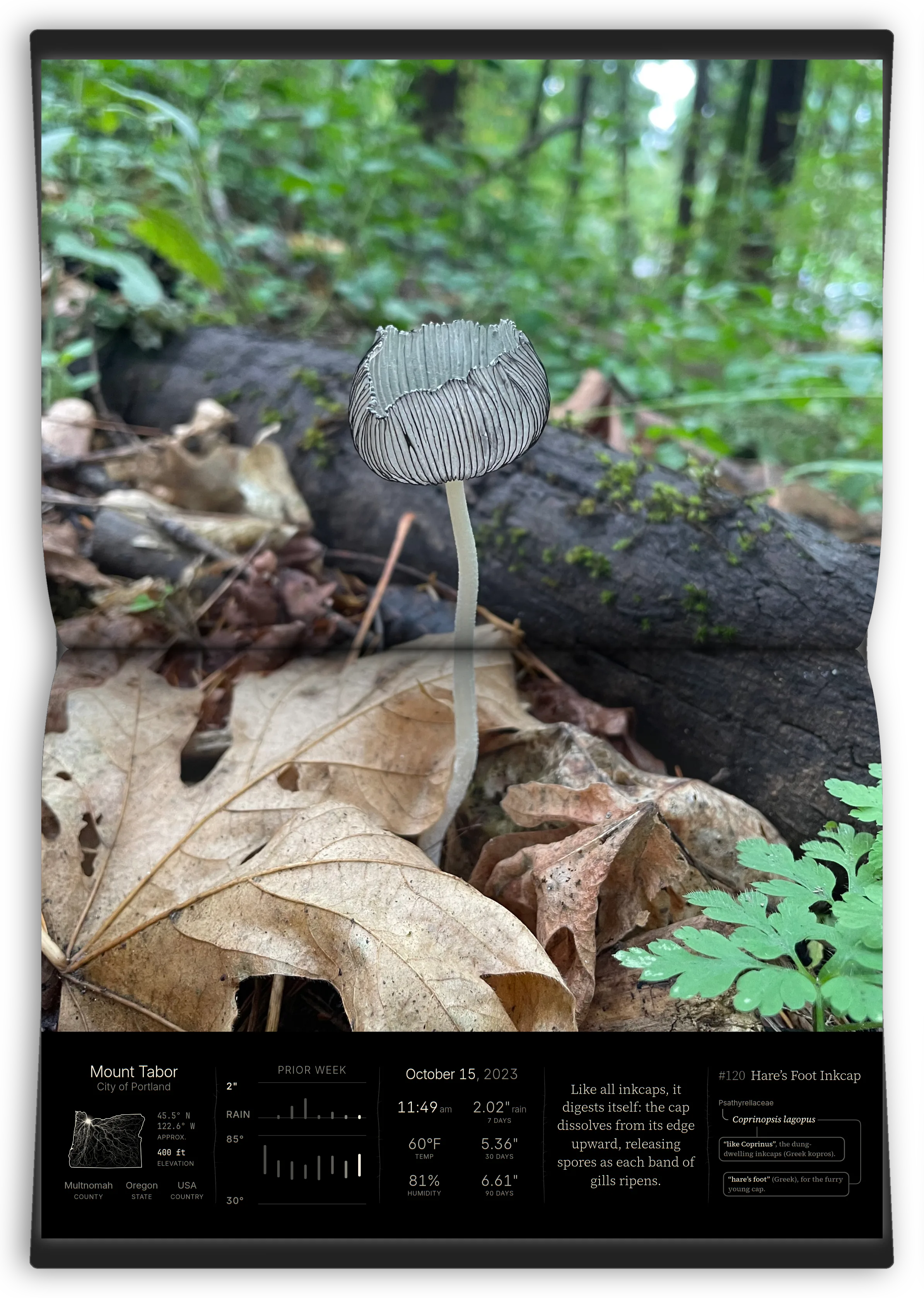
Hare’s Foot Inkcap (Coprinopsis lagopus)
#120 Hare’s Foot Inkcap (Coprinopsis lagopus). Like all inkcaps, it digests itself: the cap dissolves from its edge upward, releasing spores as each band of gills ripens. Photographed near Mount Tabor, City of Portland, Oregon, October 2023.
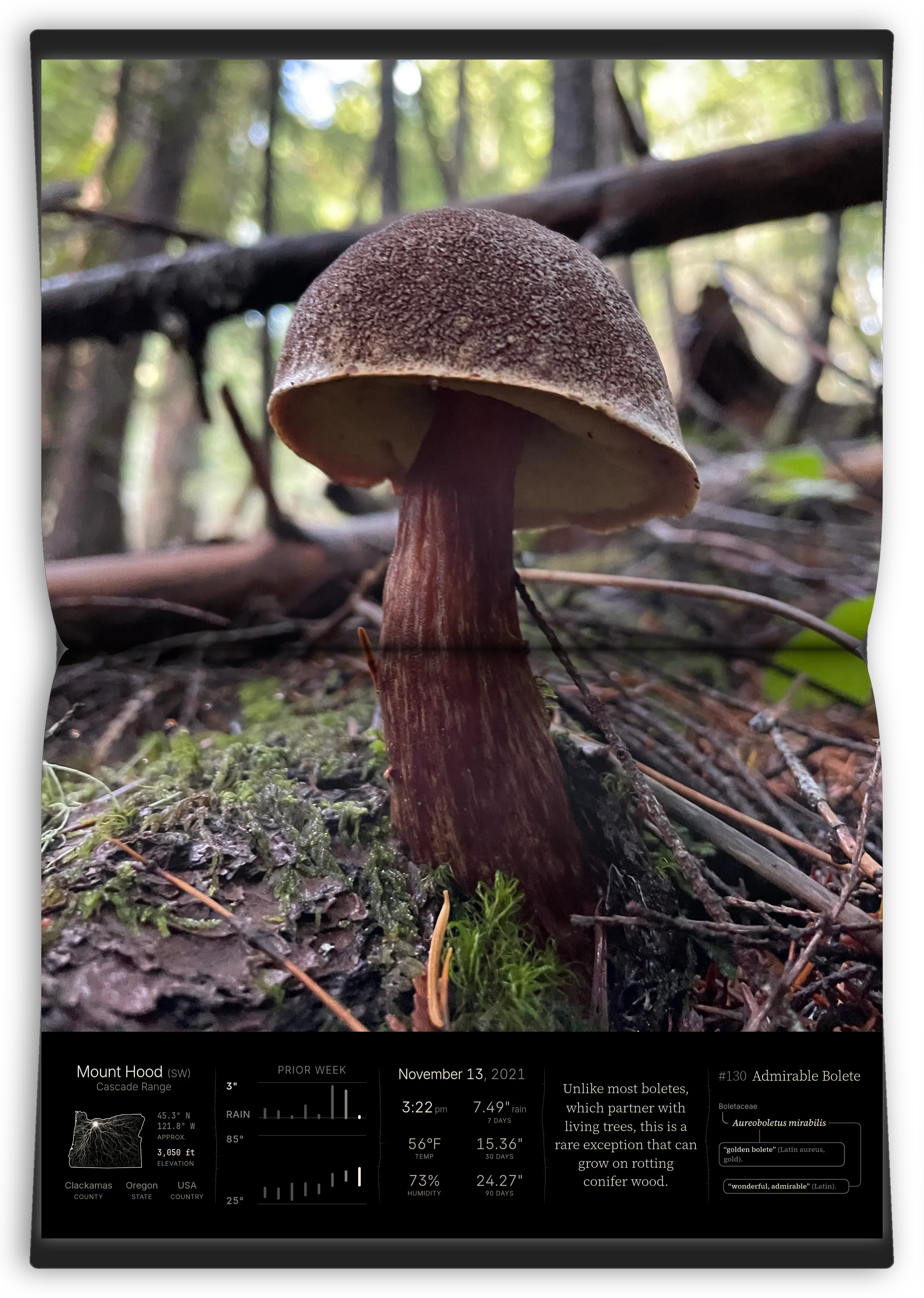
Admirable Bolete (Aureoboletus mirabilis)
#130 Admirable Bolete (Aureoboletus mirabilis). Unlike most boletes, which partner with living trees, this is a rare exception that can grow on rotting conifer wood. Photographed near Mount Hood, Cascade Range, Oregon, November 2021.
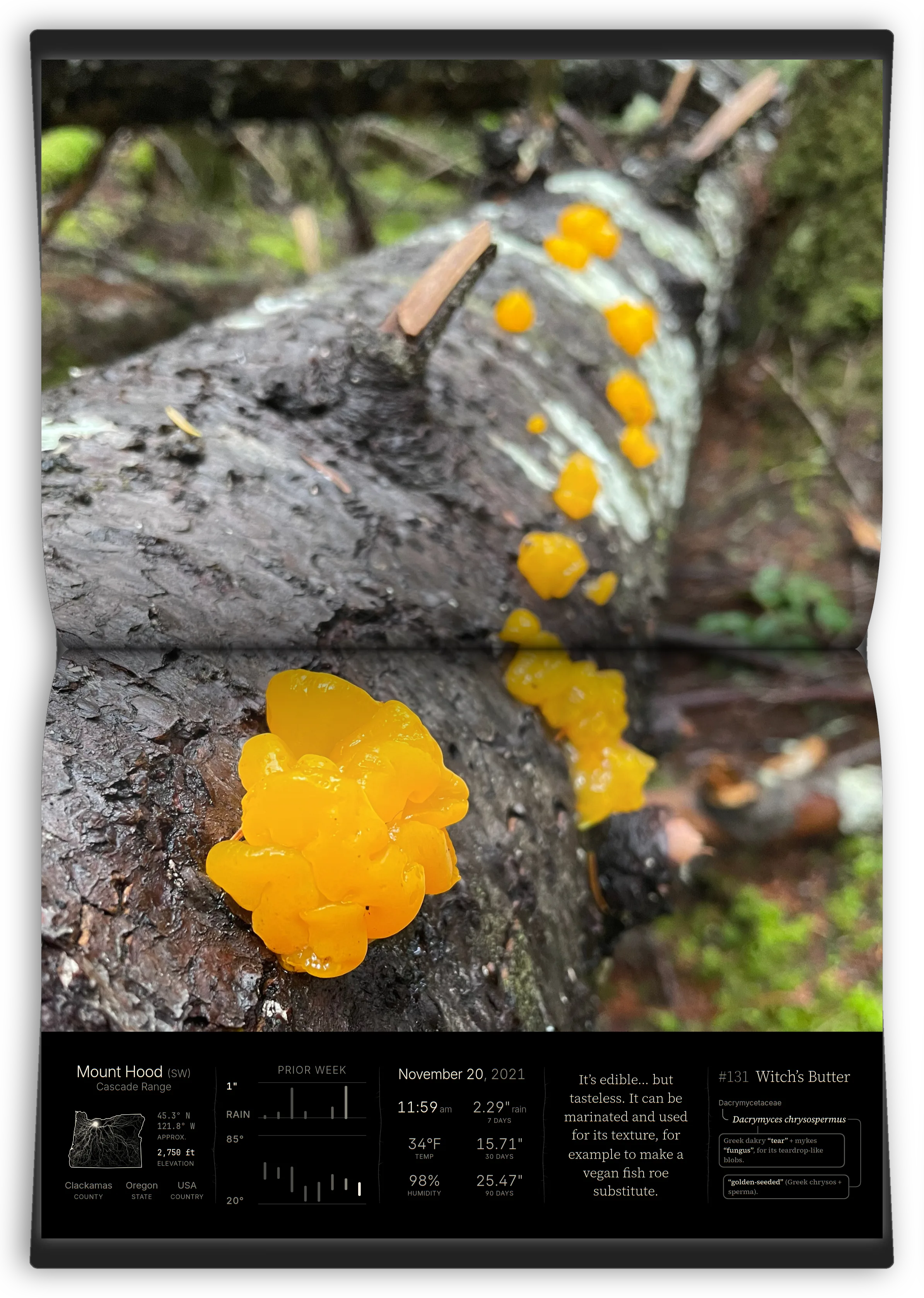
Witch’s Butter (Dacrymyces chrysospermus)
#131 Witch’s Butter (Dacrymyces chrysospermus). It’s edible... but tasteless. It can be marinated and used for its texture, for example to make a vegan fish roe substitute. Photographed near Mount Hood, Cascade Range, Oregon, November 2021.
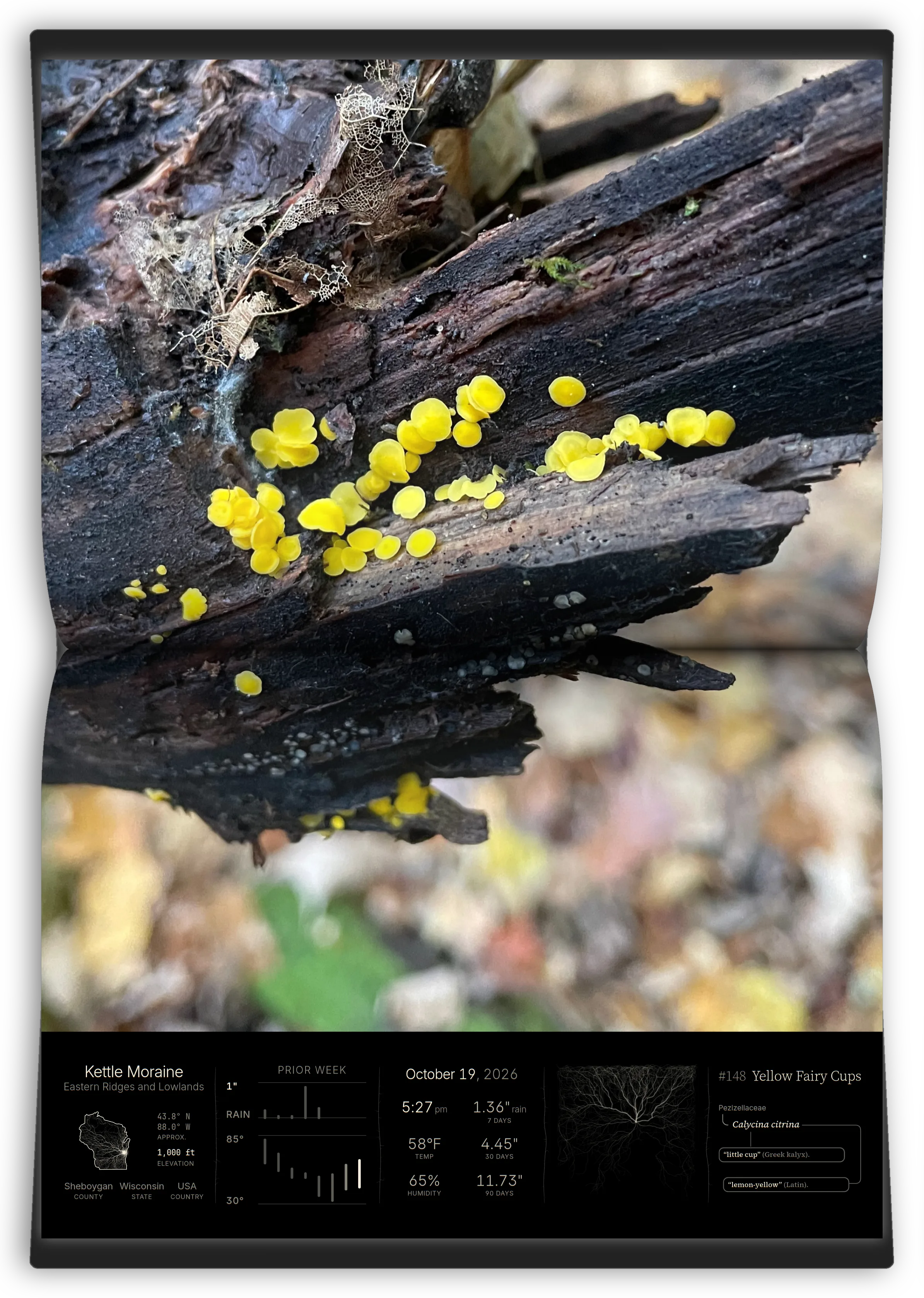
Yellow Fairy Cups (Calycina citrina)
#148 Yellow Fairy Cups (Calycina citrina). Photographed near Kettle Moraine, Eastern Ridges and Lowlands, Wisconsin, October 2026.

We hope you enjoyed that teaser.
There are 125 more mushrooms waiting for you in the print copy.

Get the book

Author

Ray Kampmeier is a freelance electronics engineer and biology appreciator who calls Oregon home.

Intention

Aside from sharing pretty photos and science, may this book’s subjects offer a bit of quiet relief. They’re a glimpse into Earth’s mysteries and miracles, which were here long, long before us.

Contents

Photographs, text, illustrations and design © 2026 Ray Kampmeier. All rights reserved.

A lot of muddy knees went into these pages. If you’d like to use a photo or borrow from the design, please ask first.